How Coderick AI helped us bring our seasonal campaign back to life in under a week
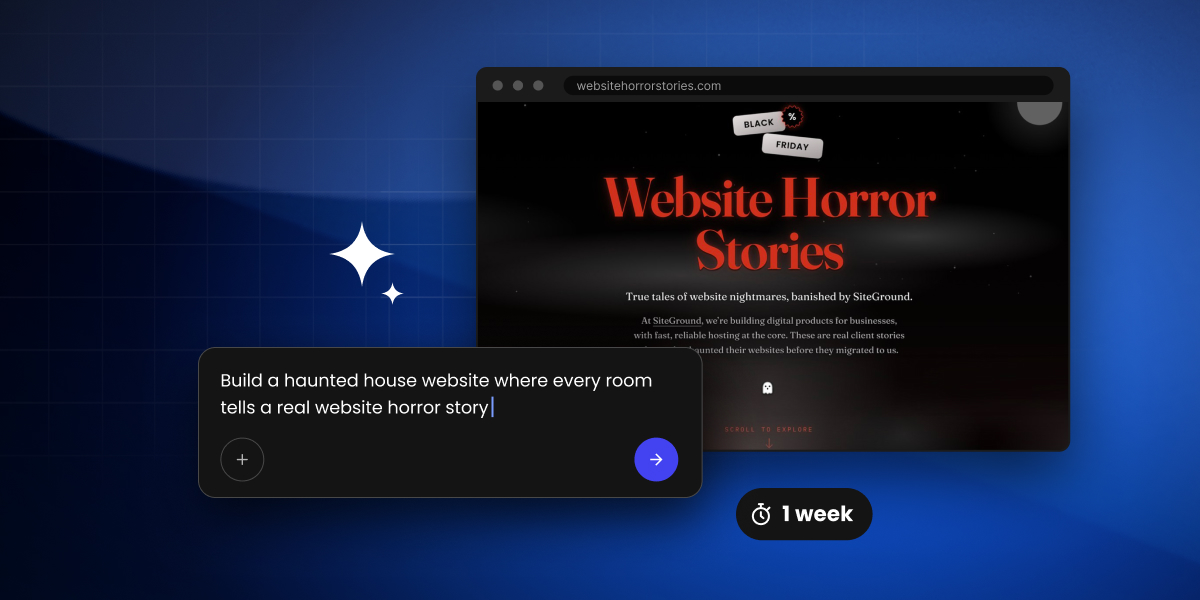
Back in 2023, we launched a Halloween campaign, called Website Horror Stories for Cyber Security Month: a collection of real stories that clients experienced and how we fixed them at SiteGround. It quickly became one of our team’s favorite campaigns, and this year, we wanted to bring it back to life with a new dedicated site, a whole new (even scarier!) look, and fresh content.
There was just one problem: time. Black Friday and the holiday season had the whole team swamped, and the campaign we wanted to plan weeks in advance never made it onto the calendar. In any other year, that would have meant skipping it.
This year, we have something we didn’t have back in 2023: Coderick AI, SiteGround’s AI website and web app building tool, which turns plain-language prompts into finished projects, with no coding needed. With it, I took the matter in my own hands. I had a very clear idea of what I wanted, only it was just in my head, and I did not have the design or engineering resources to make it happen, because we had higher-priority campaigns. After all, this was just a fun campaign…but I just couldn’t bear to miss out on some Halloween fun.
In my own time I built and launched a fully interactive campaign page with live animation, without any development help or experience, and without pausing any of our Black Friday work. And that’s on top of all my day-to-day work on the Social Media team.
What I built
This year’s Website Horror Stories page is a haunted house. Each of its six rooms holds a true story from a real SiteGround client, with names changed to protect their privacy:
- An agency owner whose server was hacked an hour before his flight to Greece, then hacked again even though he paid $1,000 to his previous provider to clean it, but they had forgotten a hidden backdoor.
- A web agency owner whose client’s site was quietly filled with malicious files through a single weak password
- A designer whose sites kept getting hacked, no matter which host he moved to
- A travel blogger locked out of his own website just as his audience was growing
- A food blog too slow to keep its readers
- A support line that sold upgrades instead of fixing problems
When you visit the site, and open a room, the story plays out as you scroll: illustrated scenes move with the text, so readers watch tiles go dark, ghosts hop from house to house and doors swing open as each story unfolds. At the end of the page, a quick website security self-check helps visitors spot risks on their own sites and points them to the right fix.
I built all of the above, on my own, with no coding experience, in a few hours, by simply chatting with Coderick AI.
How it came together
Instead of starting with a design brief and development tickets, I described what I wanted to Coderick AI in plain language. Since every new idea took a prompt rather than a sprint, I didn’t have to bet on a single direction. I tried two.
The first concept was cinematic. I asked for a dark, editorial page that treated the campaign like a film’s second edition: visitors step into a theatre and, at the darkest moment of each story, choose the character’s fate.
The second took a more playful route. Its first prompt set the scene, with the concept, and all six stories:
“Build a single-page campaign landing page called Website Horror Stories. The whole page is one interactive illustrated house, and each of its six rooms holds a real customer story told in a spooky, horror-movie voice.”
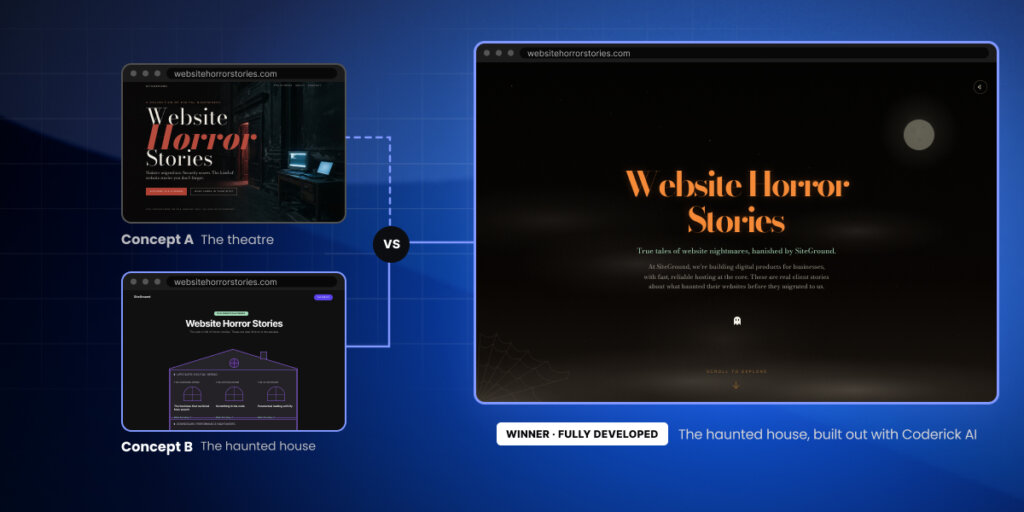
With two working pages in front of the team instead of two mockups, choosing was easy. We went with the haunted house. From there, each prompt added a layer. One turned every story into a scroll-driven scene:
“Turn the story panel into a scrollytelling section, with a pinned illustrated scene that changes as each paragraph reaches the middle of the screen.”
A few more prompts to add a security self-check, make the buttons clearer, test the page on mobile and set up the SEO and social sharing tags. When we decided to anonymize the stories, a single prompt updated every name across the whole site, from the story text to the image labels and sharing links.
And with a push of the button, our fun landing page was published live on our websitehorrorstories.com domain we already had.
The Black Friday twist
I was so proud, but then came the realisation: Halloween is just one day. So, at best, this campaign was going to be relevant for only one week, tops. If I wanted to make my efforts’s worth, I had to figure out a way to keep it running even after Halloween. And what was next in our marketing calendar? Black Friday.
Normally, that would have involved even more design work to adapt the design I already have, to our already in-progress Black Friday theme. And in the last possible minute. Not only was I not going to be voted “Favorite Coworker” by our design team: it was almost impossible that they would find the time for one more landing page design revamp.
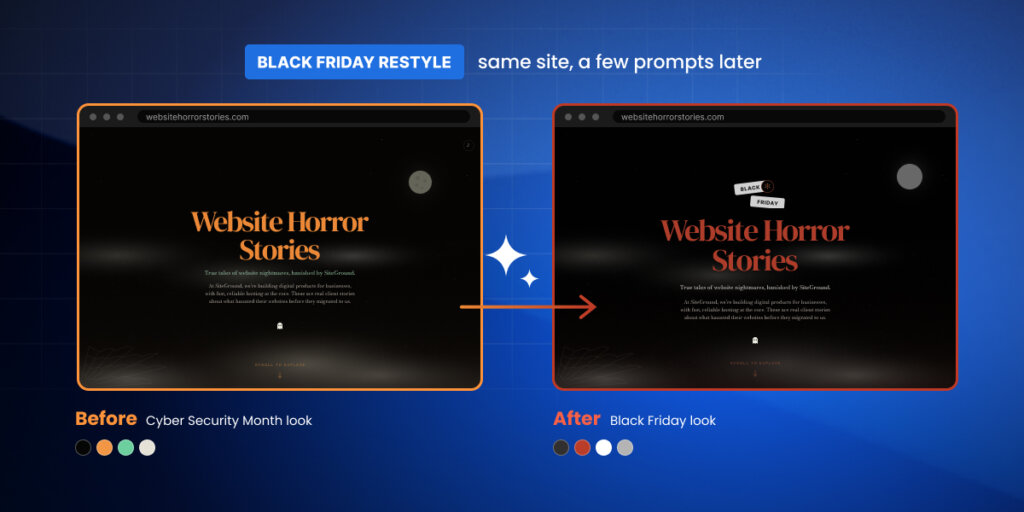
Again, Coderick saved the day. With a few prompts, Coderick restyled the whole page in our new Black Friday colors and added all the Black Friday elements we needed. Reworking a whole design would usually be a project of its own. This time, I did it all by myself in about an hour.
The Black Friday rush that almost kept this campaign from happening ended up shaping its final chapter. As our Black Friday deals went live across the SiteGround website, we wanted the haunted house to match.
Don’t let a busy season bury your best ideas
Website Horror Stories almost didn’t happen this year. Coderick AI gave me a way to bring it back without slowing down everything else, and to keep adapting it as our plans changed.
If you have an idea waiting for the right moment, whether it’s a campaign page, a portfolio or an app, you don’t need to wait for a quieter month. Describe it to Coderick AI, and watch it take shape.
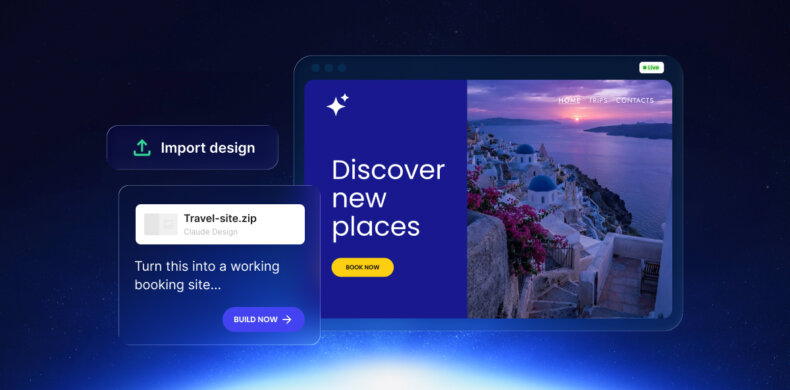
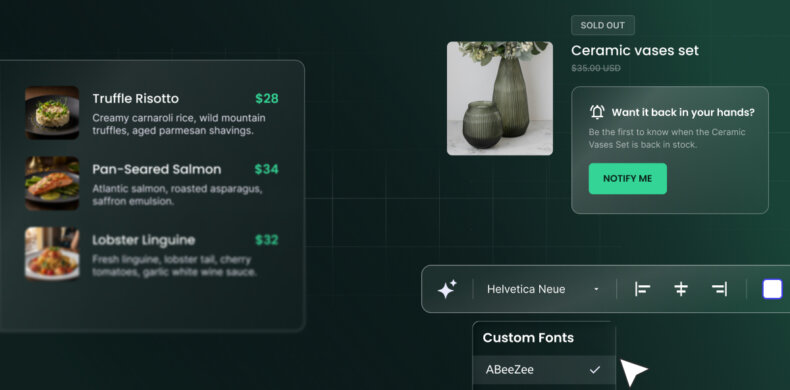
Vibe code your vision
Build production-ready sites and web apps through a simple chat, hosted on enterprise-grade infrastructure from day one. 
And if you dare, step inside the haunted house: websitehorrorstories.com.

Comments ( 0 )
Thanks! Your comment will be held for moderation and will be shortly published, if it is related to this blog article. Comments for support inquiries or issues will not be published, if you have such please report it through our official channels of communication.
Leave a comment
Thanks! Your comment will be held for moderation and will be shortly published, if it is related to this blog article. Comments for support inquiries or issues will not be published, if you have such please report it through our official channels of communication.