How to monetize a blog: The right method for every stage
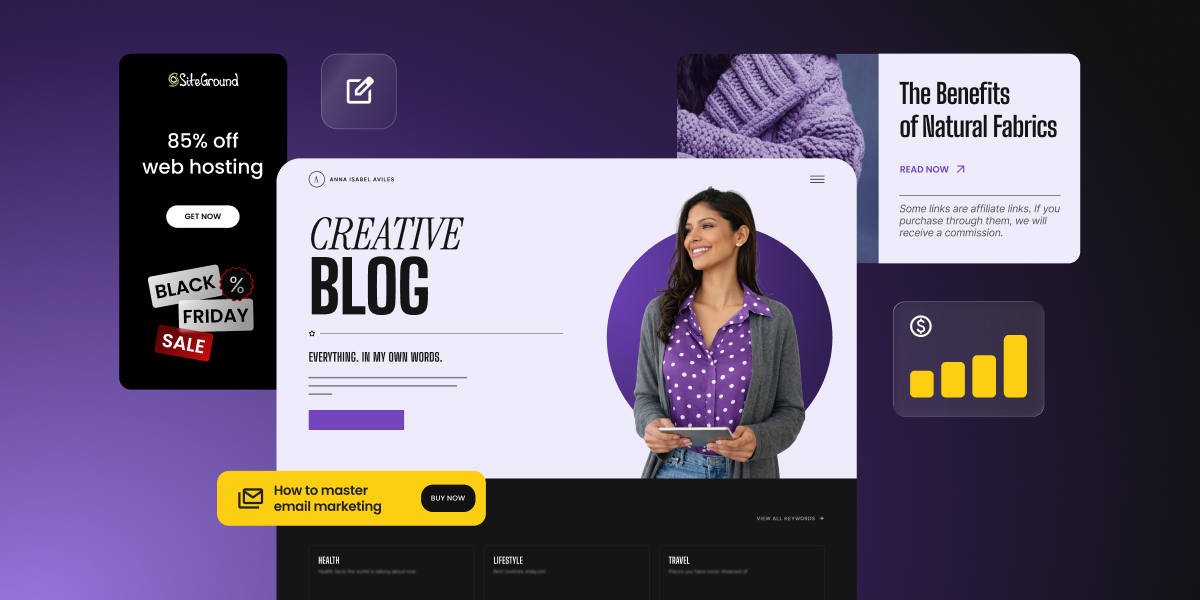
The best way to monetize your blog is to match the method to where you are right now. Some methods might work for a complete beginner whose audience isn’t yet clearly defined, while others only yield results only when you have readers that trust you. From writing sponsored posts to charging a subscription fee, there are many ways for your blog to bring you revenue, but if you pick the wrong method too early, you’ll spend a lot of effort for little in return.
Below, you’ll see what to set up first, the main monetization methods and how they compare, and a quick plan for your first year.
Key takeaways:
- A blog earns more the longer it runs, so treat the first year as groundwork and set small, specific goals.
- Real experience is what still gets read in the AI era, so pick a niche you know firsthand and can write about for a long time.
- An email list is an audience you own, so start collecting subscribers before you have traffic, not after.
- Match the method to your stage: affiliate links and services early, tips once you have regular readers, ads and sponsored posts once traffic is steady, and your own products and subscriptions once readers trust you.
- Affiliate links and sponsored posts need clear disclosure, and ads may need a consent banner, so learn the rules before you start.
- Digital products are the most passive option, while services and physical products ask for more of your time.
Can you make money blogging?
Yes, you can definitely make money blogging, though it takes time to see results. It’s the same with any business. A new idea is easiest to launch before competitors arrive, and the challenges grow with time.
Ten years ago, bloggers mostly competed with other blogs and sponsored results. Today you also compete with AI summaries and short-form discovery channels such as TikTok and Instagram. That doesn’t mean blogging is dead or a profitable blog is out of reach, it simply means that the way people find blogs is changing.
That’s why successful bloggers don’t rely solely on search engine traffic anymore, but rather treat the blog as the full version of an idea and use other channels to bring readers to it.
- Reddit gets the raw thought, a teaser that starts a conversation.
- Pinterest gets a visual pin that sends readers straight to the post.
- Email gets the practical, actionable version.
Every marketing channel points back to the blog, where readers stay longer, click your affiliate links, join your list, or buy what you offer, but more on that later in the article.
How much money can a blogger make?
In Productive Blogging’s 2026 income survey, average monthly income climbed with the age of the blog:
| Age of blog | Average monthly income |
| 1 to 3 years | $100.35 |
| 3 to 5 years | $746.73 |
| 5 to 10 years | $2,325.62 |
| 10 years or more | $7,060.72 |
Keep in mind, these numbers are just averages. What also makes a difference is the effort you put in. For example, bloggers with under 100 posts usually averaged less than $40 a month, whereas those with 100 to 299 posts averaged $1,987.52.
Having multiple streams of income plays a huge role, too. Publishers with four or more revenue streams pulled in $129.92 per 1,000 pageviews, compared to just $27.33 for those relying on a single source.
How long does it take to monetize a blog?
According to the same survey, roughly 25% of bloggers start earning within six months, and a similar share transition to a full-time career within two years. Additionally, Orbit Media reports that bloggers who consistently monitor analytics are more than twice as likely to see strong results compared to those who rely on their intuition.
What you need to have in place to make money blogging
To make money blogging, you need three things in place: a self-hosted blog, a profitable niche, and an email list. If you’ve been blogging for a while, you probably already have them, so use this section as a quick checklist before you monetize your blog.
A self-hosted blog
When creating a blog, the first decision you need to make is where it’ll live. You can choose between a self-hosted blog (where you pay a hosting company to run your website) or renting space on a shared platform with other publishers.
Choosing to self-host offers several key advantages:
- Control: You fully customize your blog’s design and use your own domain name (e.g., yourblog.com, which looks more professional than yourblog.blogspot.com). Plus, on free platforms, the provider sets the rules and can modify or remove your content at any time.
- Monetization: you choose which methods to use, and how many, while some free platforms limit your options or take a cut. Substack, for example, takes 10% of paid subscriptions.
- SEO: Beyond basic on-page elements like headings and alt tags, you can run a technical SEO audit and manage critical files like robots.txt and XML sitemaps, essential optimizations that free platforms usually restrict.
A shortcut worth knowing: SiteGround Website Builder comes with a blogging functionality, ecommerce tools if you want to sell something yours, mobile-ready templates, and built-in social sharing and email signup, all without piecing together separate plugins.
A niche
Follow your passion when choosing your blog’s niche, it may sound cliché, but right now, it’s your best bet. AI can summarize general facts in seconds, which is why Google and readers value blog content that a summary can’t replicate: original information derived from real-life experience. This comes easily when the topic is close to your heart.
To turn your passion into a niche, ask yourself what you can explain better than most people and what you want to be known for. Dive into topics where you have something you use or like to offer. For example, a food blog if you cook, fashion advice if you love clothes, or commentary on pop culture if you follow it closely, and use what you’ve actually done like your own results, mistakes, photos, and experiments.
Blogging is a long-term journey, so success depends on choosing a topic you’ll enjoy exploring even after your first batch of ideas runs dry.
An email list
According to Contentsquare’s 2026 digital experience benchmark, across websites in general, only about 13% of visitors come back within 30 days of their first visit. So, if you wait until you have traffic to ask for an email address, you’ll lose those early readers forever.
Having an email list solves this problem. This is an audience that belongs to you, so neither an algorithm change nor the platform shutting down can take it away from you, and it’s the most direct connection you can build. It allows you to reach people with your latest blog posts, with older content they might enjoy, and, later on, with something you’re selling.
It also pays off. In Productive Blogging’s survey, email marketing was the biggest difference between lower- and higher-earning bloggers, and bloggers who did it earned about twice as much as those who didn’t.
Since people rarely share their email addresses without some kind of incentive, you’d need to offer them some kind of a “lead magnet”: a free guide, checklist, or template that they can use right away to solve a specific problem.
The 7 core methods to monetize your blog
Now you’re ready to explore the main ways to monetize your blog, starting with the ones that work at any stage and ending with the ones that need an established audience.
| Method | Best stage | For what kind of blog | Average RPM* | What you need first |
| Affiliate marketing | Any stage, especially with low traffic | Reviews, tutorials, and how-tos in any niche with products readers buy | $34.66 | Products you’d recommend and a tracked link |
| Services | Any stage | Blogs run by people with real expertise, such as writers, designers, and coaches | $100.00 | Expertise to sell |
| Donations and tips | Once you have regular readers | A loyal community, a strong personal voice, or free resources readers reuse | Not measured | A loyal community |
| Blog ads | Steady, high traffic | Blogs with high, steady traffic that already earn elsewhere | $33.16 | Traffic that meets the network’s minimum |
| Sponsored posts | Steady, provable traffic | A clear niche that brands want to reach | $100.00 | A media kit |
| Subscriptions | A loyal, returning audience | Blogs that publish content readers can’t get elsewhere, such as in-depth guides or research | Not measured | Premium content readers can’t get elsewhere |
| Digital and physical products | After you know your audience | Blogs whose readers trust you and keep asking the same questions | $535.90 | An audience that asks the same questions |
*Average RPM among bloggers whose main revenue stream is this method, according to Productive Blogger. Tips and subscriptions weren’t measured.
Selling affiliate products
Affiliate marketing is a type of brand partnership, where you earn commission each time someone buys or signs up through the link the company gave you. It’s also one of the easiest ways to start, since joining affiliate programs is free and the main requirement is usually an online presence, which your blog already is. Also, whatever your niche, there’s likely a program that fits it that you can join.
However, from a legal standpoint and to maintain your readers’ trust, it’s advisable to disclose such partnerships at the beginning of every post in which you include affiliate links, as shown in the example below.
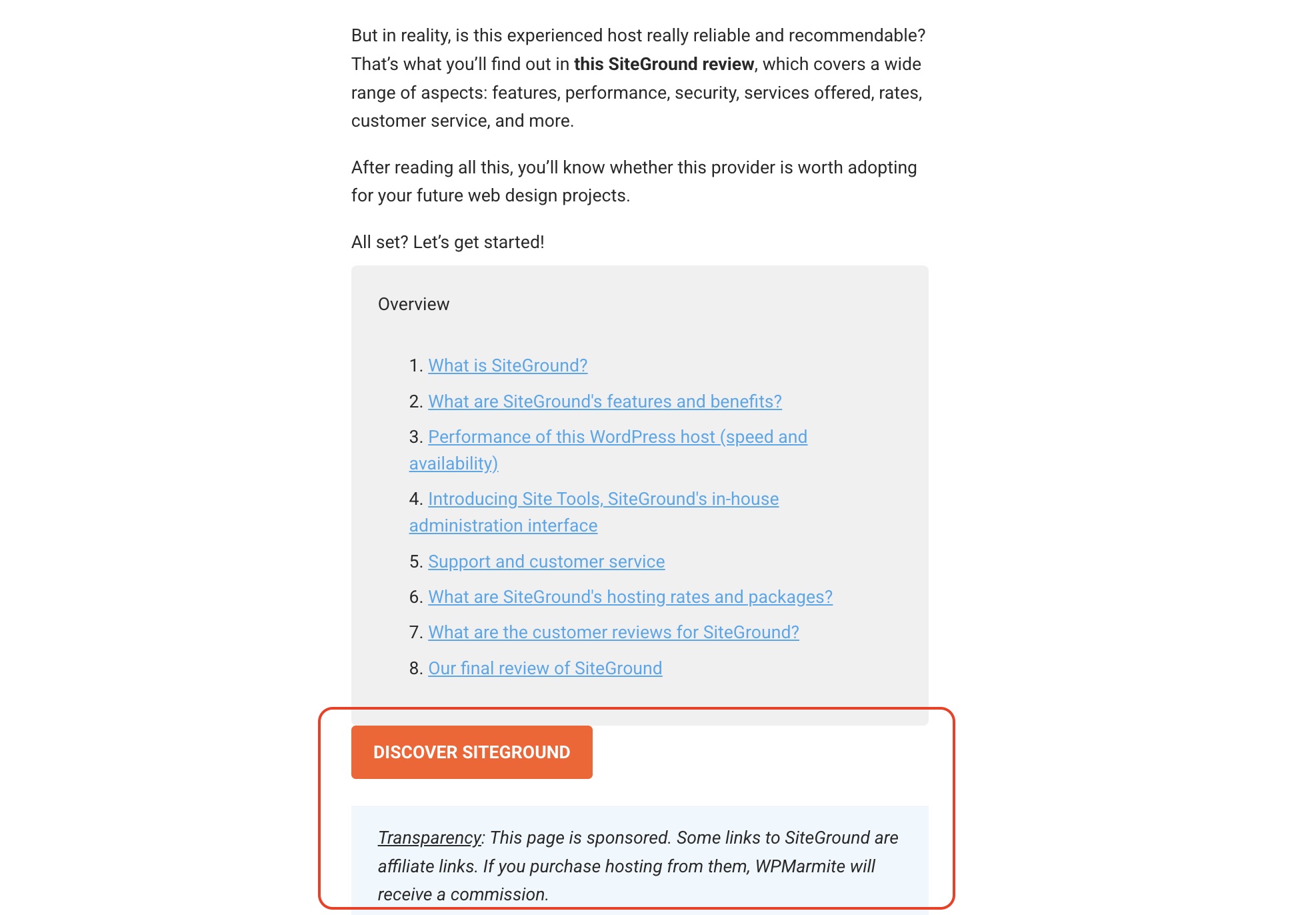
How to start: Join an affiliate program, which usually means applying and getting approved. You can apply to several at once through an affiliate network, or go straight to individual brands and look for the affiliate page on their websites. For example, if your blog covers building websites, hosting, or similar topics, SiteGround’s affiliate program is a good starting point. You get generous commissions, weekly payouts, and a dedicated affiliate manager who can help you plan your monetization strategy.
Offering services
This monetization strategy takes you outside your usual content flow and asks for more time and effort than writing blog posts alone.
Offering services means selling your expertise directly to whoever needs it. That can be freelance work (writing if you blog about writing, design if you blog about design), coaching in one-on-one sessions in your niche, or consulting for a single client or a whole business.
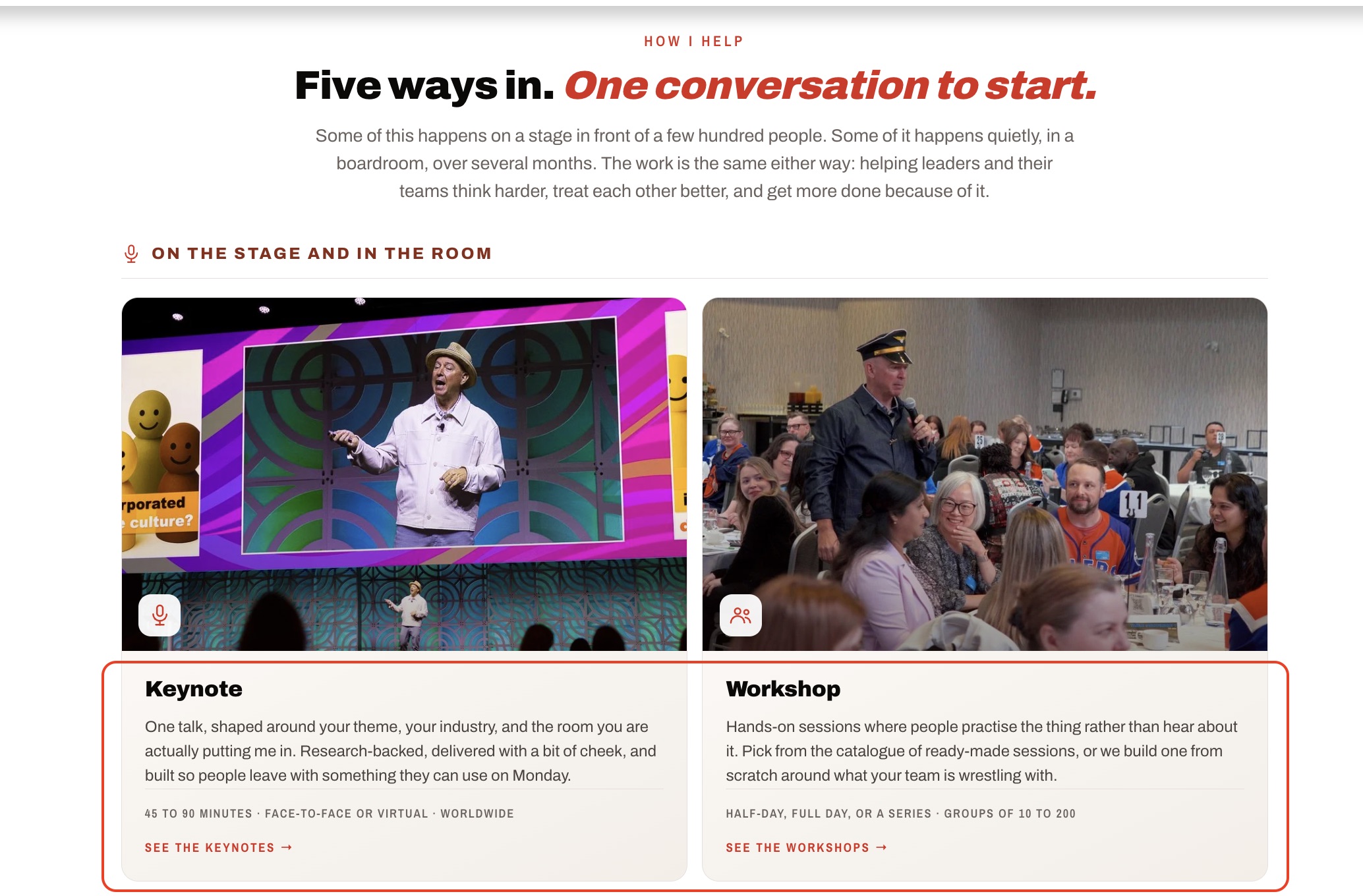
How to start: Add a “Work with me” page, link your best blog posts as samples, and include a simple inquiry form so potential clients can tell you what they need. Offer coaching or a small starter package, such as one call or a one-off project. Later, you can turn coaching into an online course, as we’ll see later in the article.
Asking for tips
Asking readers to support your blog through a tip jar or a “buy me a coffee” button is one of the simplest ways to earn money from it. It needs no product, no ad network, and not much traffic. The catch is that most readers give small amounts, often a few dollars, and only a small share ever give more than once.
That’s why tips rarely replace a full-time income. Instead, they work best as a bonus alongside other revenue streams. They are particularly effective for blogs with a strong personal voice, such as travel diaries or local history sites, as well as platforms that share free resources like research, reports, or detailed guides.
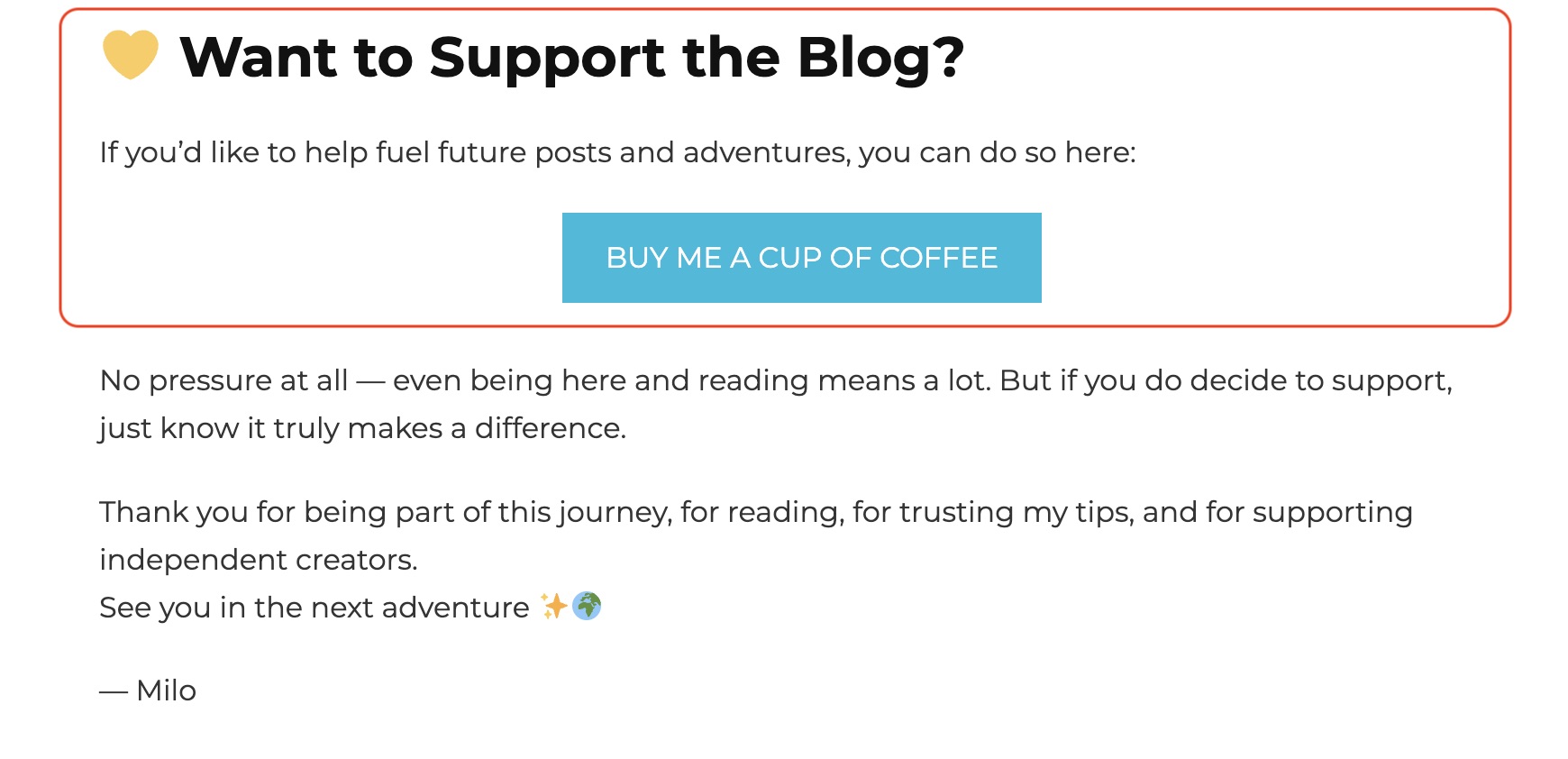
How to start: Sign up on a platform such as Ko-fi, Buy Me a Coffee, or Patreon, and check the fees first, as payment providers take a cut. Be specific about what the contributions will fund, since a clear ask raises more than a vague request. You can also add a progress bar if your platform offers one, giving your supporters a clear view of what their money is helping to achieve.
Selling ad space
Once your blog has steady traffic, selling ad space to brands becomes a natural next step. You place ad code in specific areas on your site, such as the sidebar, header, footer, or inside your article text, and get paid whenever visitors see or click them. This is one of the most passive ways to earn income from your site. It does depend on your audience size though, so the more you drive blog traffic, the more you earn.
There are three main routes to building an income stream with blog advertising:
- Use an ad network: You sign up with a company that acts as the middleman, selling ad space from many publishers to advertisers at fixed prices, per 1,000 views (CPM) or per click (CPC). The trade-off is less control, since the company manages placement, and you often don’t know which advertisers appear.
- Negotiate with companies directly: You set the price and choose who appears, and you may negotiate larger custom fees, but you do the selling yourself and handle the ad banners too.
- Join an ad exchange: This is an open marketplace where advertisers bid for your space in real time. You can see who bought your space and at what price, and you get more control over price floors.
It’s good to know that ads come at a cost. Intrusive ads hurt reader experience and worsen your Core Web Vitals scores by shifting layout, so assign fixed spots for them. There are legal rules too, like a consent banner for visitors in some regions and a privacy policy that mentions your ad cookies, so keep an eye on what applies to your readers.
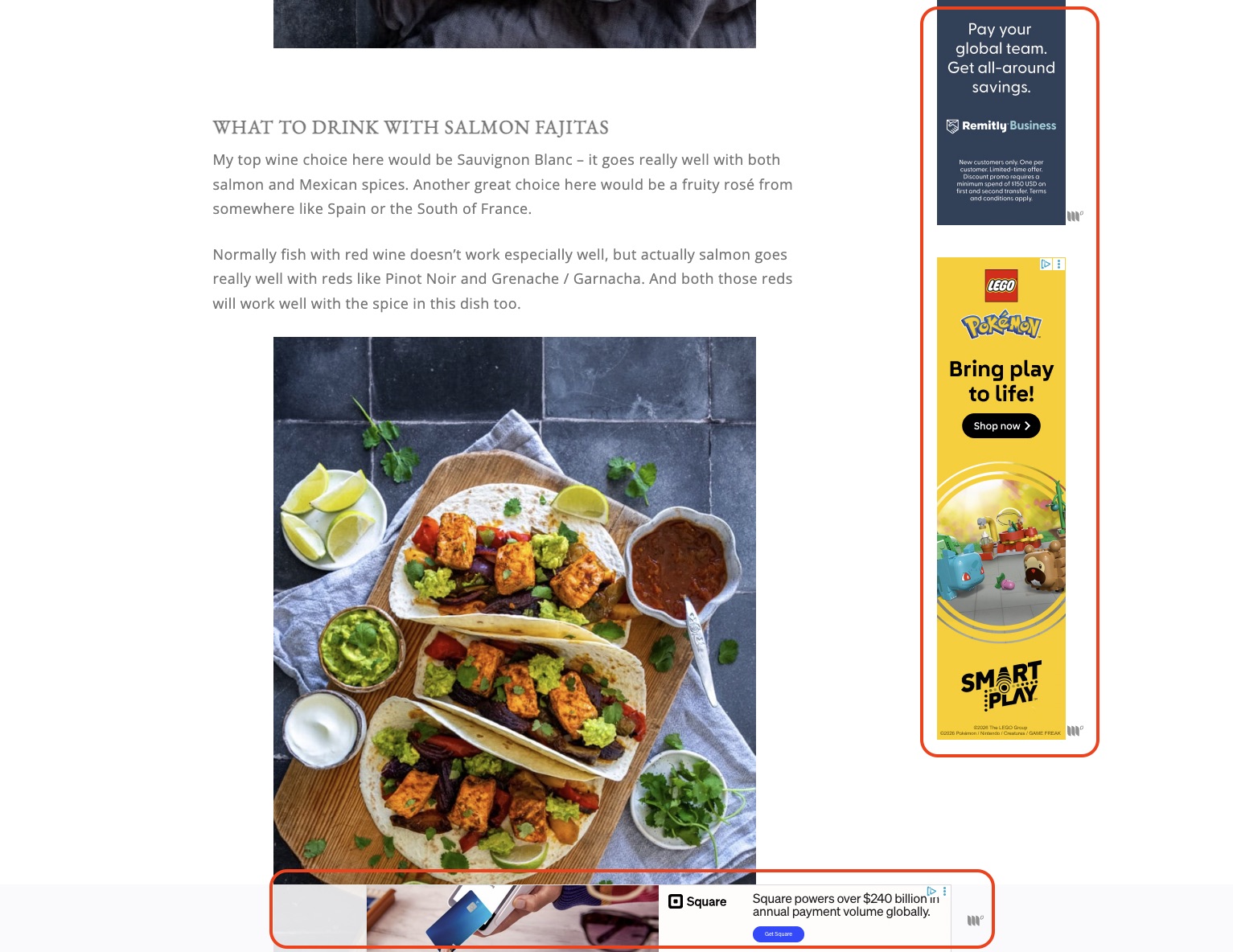
How to start: We recommend using an ad network, since the network finds the advertisers and manages the placement for you. A beginner-friendly option is Google AdSense, which has no minimum traffic requirement. As your traffic grows, you can move to a higher-end network such as Mediavine or Raptive, where publishers report higher earnings per visitor. Once you understand how ads work, you can explore the other aforementioned methods.
Producing sponsored posts
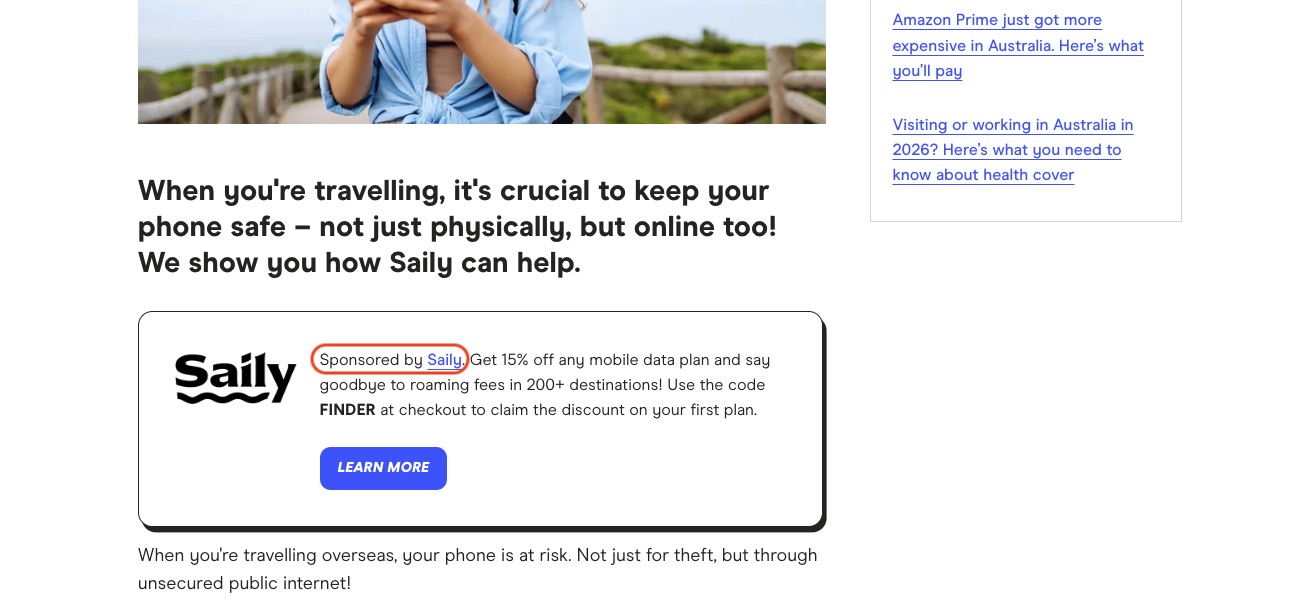
Sometimes called collaborative posts, brand collaborations, or simply collabs, these are another form of advertising where a brand contacts you or you pitch to them to feature their products or services on your website in return for a fixed payment. Getting a brand to pay for a sponsored post usually starts with a media kit: a one or two-page document highlighting your traffic, audience interests, and engagement metrics so brands can review the numbers before committing any budget.
Just as with affiliate marketing, sponsored content should be disclosed to readers if you don’t want to lose their trust.
How to start: In general, sponsored posts work best for established publishers, since brands want greater exposure. That doesn’t mean you can’t reach out sooner, since brands also review how engaged your readers are, not only how many there are. So before you reach out, publish at least a dozen blog posts, get clear on who your readers are, and gather proof that they engage, such as comments, email signups, and your traffic stats, for your media kit.
Once you’re there, make a list of companies your readers already buy from or that you use yourself, and pitch them with your media kit and a post concept. A good pitch can win the deal since brands appreciate when you clearly know their product, bring a fresh angle, and show real effort.
Requiring a subscription fee
The subscription economy is projected to reach roughly $739 billion in 2026, according to The Business Research Company, and blogs are a small but growing part of that shift toward recurring revenue. To capture a share of this growing market, creators typically restrict access using two specific paywall models:
- A hard paywall requires payment before a reader can access any content. This model works best for established publications that already have a dedicated, loyal audience willing to pay upfront.
- A soft paywall keeps most articles free while gating in-depth analysis or bonus content behind a membership. This approach is ideal for growing blogs, as it allows new visitors to sample your writing before committing financially.
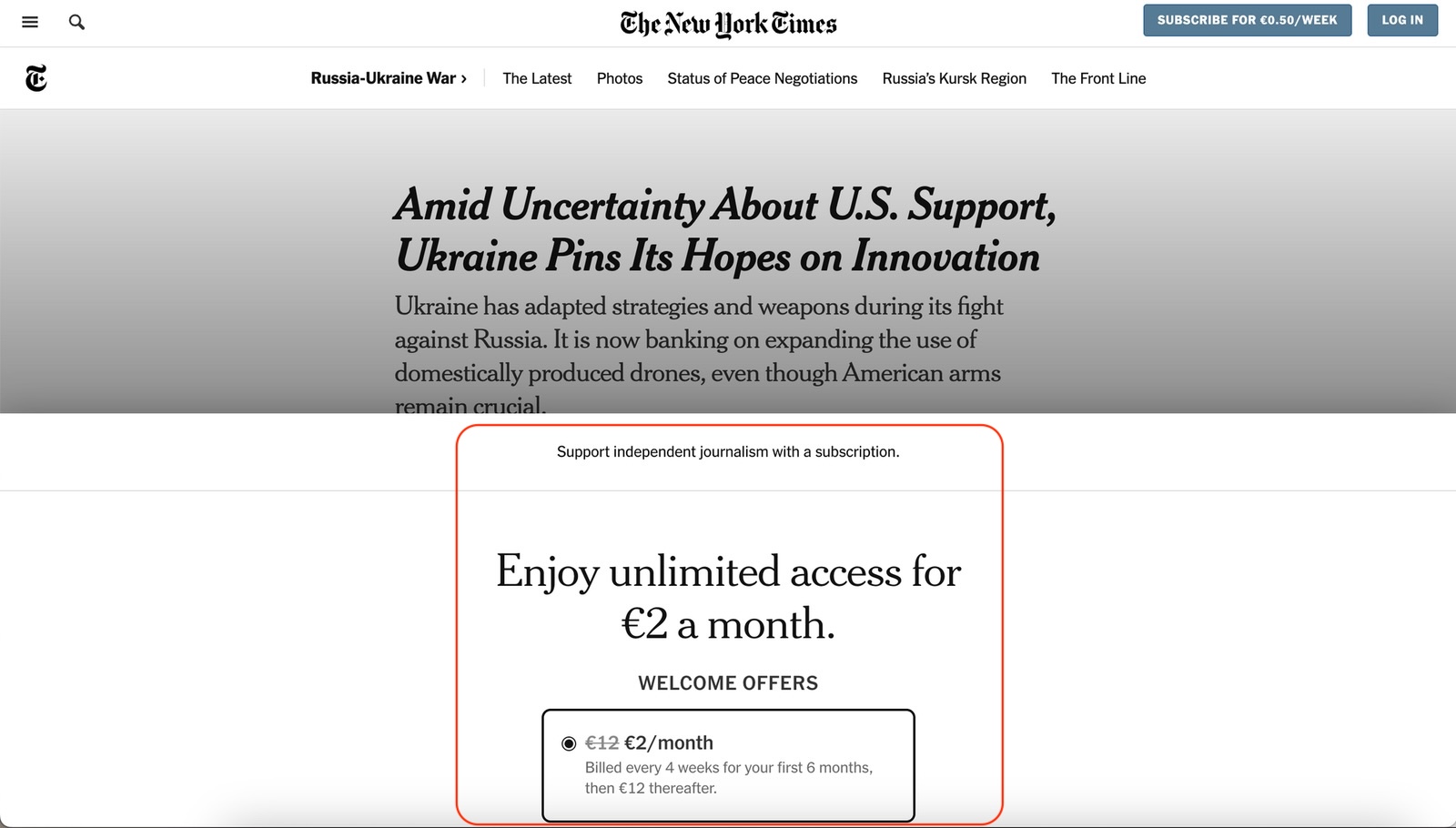
Either strategy pairs well with clear pricing tiers and a free trial period, so readers can evaluate the value before committing. News sites often do this, but they aren’t the only ones. The New York Times, for example, lets you read a few articles for free and then offers a discounted introductory price to subscribe.
Paid memberships also succeed when you consistently publish high-value insights that readers can’t easily find elsewhere for free. This could include a food blog that keeps its recipes free but sells weekly meal plans, a finance blog with a members-only monthly budget review, or a travel blog that charges for detailed itineraries.
How to start: You can try a series, with the first part free and the rest for subscribers, to test your idea before putting more of your blog posts behind a paywall.
Selling your own products
If you’ve been offering coaching or consulting, you’ve probably noticed that you answer the same questions again and again, call after call. That’s where selling your own products often starts: the knowledge you share one-on-one can become a digital product, such as an online course, an ebook, or a template, that readers buy on their own time. You create it once and sell it repeatedly, with very high profit margins after the initial work is done, making it a good fit if passive income is what you’re aiming for.
Physical products work differently, though, since they need more maintenance, with stock to make, store, and ship. So match the product to the time you can give it.
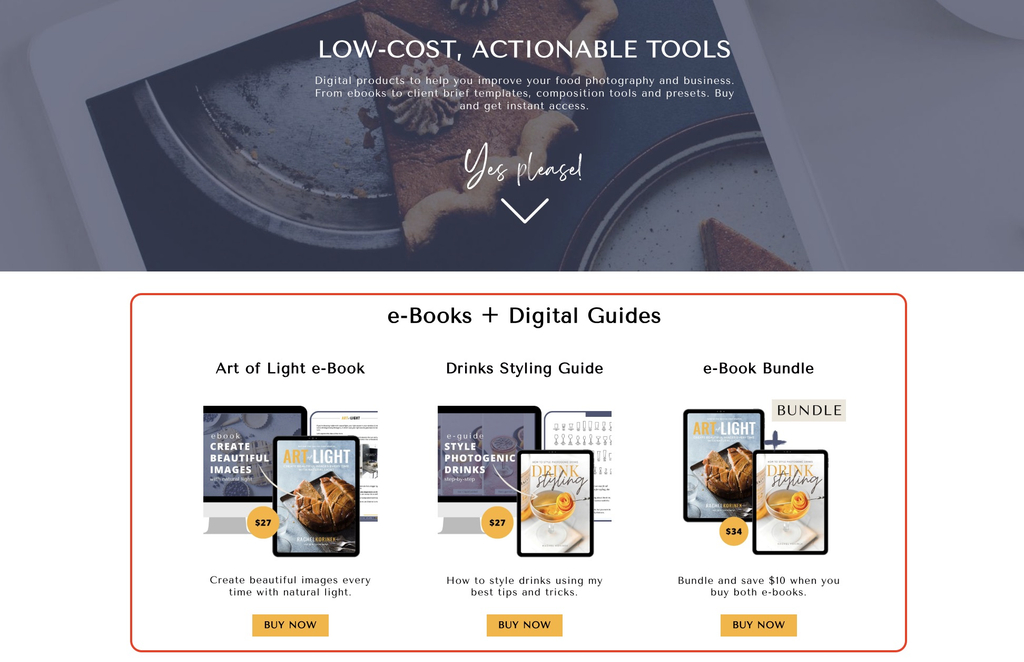
How to start: Coaching isn’t the only way to find a product idea. Look at your most commented posts to see which problem readers raise the most, or ask your email list and social media followers in a short poll whether they’d use a product that solves it, which also builds anticipation for the launch.
Once you know there’s demand, you’ll need to add a new page to your blog where the product lives and people can purchase it. SiteGround Website Builder, for example, has ecommerce built in, so you can accept payments and set up how the product gets delivered. A small discount for your first 10 buyers is a good way to collect the testimonials that help future sales.
Which blog monetization method should you start with?
Start with whatever fits where your blog is today. If you’re new or don’t get much traffic yet, affiliate marketing is one of the easiest ways in. Once your traffic is steady, you can include ads and reach out to brands for sponsored posts, and once readers trust you, your own products or a paid membership is another way to monetize your blog. You can offer services at any stage, but this requires more than just your free time, so add one method at a time and stick with the ones that work.
If your blog is about website building, ecommerce, email marketing, or AI tools, SiteGround’s affiliate program is a natural place to start. You get both tiered and recurring commissions, weekly payouts, and a dedicated affiliate manager to help you along the way.
FAQs about how to monetize a blog
Beginners usually start with affiliate marketing, since it doesn’t need a large audience or a product of your own. Write a few posts that help readers choose or use something, such as a tutorial or a review, and add affiliate links to the products you recommend in them. Another option is to offer services, which can work at any stage as it doesn’t depend on traffic, though it takes extra time and effort.
The average blog takes a few years to reach $1,000 a month. Some get there sooner, especially with steady publishing, and more than one way to earn. The more you publish and the longer your blog runs, the faster your income tends to grow, so every post you write helps.
You can write on a shared blogging platform, such as Medium or Substack, and some of them let you earn right away. A self-hosted blog gives you more flexibility, though, since you decide which monetization methods to use and how to combine them, instead of working within a platform’s rules.
Yes, affiliate marketing is a legitimate, widely used monetization method, relied on by major retailers like Amazon as well as thousands of niche brands. It’s regulated by FTC disclosure rules, which require bloggers to clearly state when a link is an affiliate link, and legitimate programs pay commissions reliably, as outlined in their published terms of use.





Comments ( 0 )
Thanks! Your comment will be held for moderation and will be shortly published, if it is related to this blog article. Comments for support inquiries or issues will not be published, if you have such please report it through our official channels of communication.
Leave a comment
Thanks! Your comment will be held for moderation and will be shortly published, if it is related to this blog article. Comments for support inquiries or issues will not be published, if you have such please report it through our official channels of communication.